
Research & Innovation
Advancing medication preparation and delivery through clinical insight, purposeful innovation, and structured research
Turning Clinical Problems Into Purposeful Innovation
At Alexander International Innovations, research and innovation are part of one continuous process. Clinical observations lead to new ideas. Bench testing helps us understand their potential. Structured research evaluates performance. Intellectual property protects the technologies that emerge.
Our work is focused on improving medication preparation and delivery through better pressure management, fluid recovery, airflow, bubble control, workflow efficiency, and medication stewardship.
Explore Our Work
Discover the evidence, technologies, and intellectual property advancing AII’s medication-delivery platform.


Research & Evidence Development
AII’s structured research program builds upon clinical observations, internal bench testing, product-development evaluations, and feedback gathered during the development and early use of I2F.
Built on Early Testing and Real-World Observation
AII has already conducted preliminary bench, simulated-use, and operational evaluations involving vial access, fluid transfer, medication recovery, pressure behavior, visible spray loss, bubbles, foam, flow continuity, and workflow performance.
These early evaluations have helped guide I2F’s development, inform its operating instructions, and identify the most important questions for controlled and repeatable investigation.
Areas Evaluated
Vial-emptying and fluid-transfer time
Single- and multi-bottle pooling
Residual fluid and medication recovery
Visible spray and fluid-ejection events
Additional Observations
Pressure and airflow behavior
Bubble and foam formation
Flow continuity and interruptions
Device sizes and workflow configurations
Preliminary findings and internal observations are being advanced through structured protocols designed to evaluate repeatability, quantify performance differences,
and support future technical and scientific reporting.
Advancing From Observation to Structured Evidence
AII has developed a series of controlled research protocols to examine the performance, workflow, engineering, and human-factors questions identified through bench testing and early use. Some protocols are ready for execution, while others remain under development or are intended for later research phases.
-
Status: Preliminary Timing Evaluation Conducted; Protocol Ready for Execution
This controlled, simulation-based study will compare medication preparation and administration workflows with and without I2F.
The study will evaluate hands-on time, preparation and transfer time, workflow interruptions, manual manipulations, corrective actions, user-reported workflow burden, and differences between single-vial and multi-vial procedures.
-
Status: Preliminary Observations Collected; Protocol Ready for Execution
This controlled bench study will evaluate whether vial-access methods affect fluid recovery and unrecovered fluid loss during standardized preparation and transfer procedures.
The study will measure residual fluid, total recovered fluid, recovery efficiency, spray or expelled-fluid loss, visible foaming, bubble burden, transfer time, and required manipulations.
-
Status: Preliminary Bench Testing Conducted; Expanded Protocol Ready for Execution
AII has conducted preliminary evaluations of vial-emptying and fluid-transfer performance. This expanded controlled study will compare standard vial-access methods and I2F under repeatable bench conditions.
The study will evaluate vial-emptying time, residual fluid, flow continuity, interruptions, visible bubble burden, operator manipulation, and overall transfer efficiency.
Medication Recovery and Workflow Studies
-
Status: Protocol Ready for Execution
This controlled study will examine observable indicators of medication-handling stress during fluid preparation and transfer using standard vial access and I2F.
The study will evaluate visible foam and bubble formation, persistence of bubbles and foam, flow interruptions, manipulation requirements, transfer consistency, and residual fluid. Later phases may incorporate subvisible-particle, optical-clarity, or protein-related analyses when appropriate resources are available.
-
Status: Protocol in Development
This foundational engineering study will evaluate how different vial-access methods affect internal pressure during simulated medication withdrawal.
The study is expected to measure maximum internal vial pressure, pressure changes during repeated withdrawal, time to pressure normalization, spray-back or fluid-ejection events, bubbling, foam formation, leakage, and differences in pressure stability between access methods.
-
Status: Protocol Developed; Study Planned
This controlled bench study will compare visible air-bubble formation during simulated medication withdrawal, pooling, and infusion preparation with and without I2F.
The study will evaluate visible bubble burden, bubble persistence, movement of bubbles into tubing, estimated bubble size, foam persistence, manual bubble-clearing actions, simulated air-interruption events, and bubble-dissipation time.
-
Status: Protocol Developed; Study Planned
This study will evaluate observable fluid behavior when simulated medication systems remain assembled or undisturbed for defined periods.
The study will examine foam and bubble persistence, pressure retention or normalization, fluid clarity, visible precipitation or particles, stability following repeated handling, and performance when fluid transfer resumes after a dwell period.
Air, Pressure, and Medication Handling Studies
-
Status: Protocol Developed; Study Planned
This controlled study will compare simulated infusion delivery using standard bottle-access methods and I2F-assisted bottle access.
The study will evaluate flow-initiation time, total delivery time, flow continuity, interruptions, air-related events, troubleshooting time, tubing and bottle manipulations, need for re-priming, residual fluid, and visible bubble and foam behavior.
-
Status: Protocol Developed; Study Planned
This study will evaluate whether representative healthcare and veterinary users can independently incorporate I2F into simulated medication-preparation and administration workflows.
The study will assess first-time-use success, completion of critical tasks, use errors, close calls, requests for assistance, task-completion time, ease of use, user confidence, workflow compatibility, and training adequacy.
-
Status: Protocol Developed; Study Planned
This study will evaluate whether representative users can understand and follow the I2F Instructions for Use during simulated medication-preparation and administration tasks.
The study will assess understanding of intended use, warnings, precautions, setup sequence, troubleshooting, disposal, single-use limitations, first-time-use success, and potential use-related errors or misunderstandings.
Infusion and Simulated-Use Performance Studies
-
Status: Protocol Developed; Study Planned
This controlled bench study will evaluate the physical and functional condition of I2F following exposure to representative infusion-related fluids and simulated-use conditions.
The study will assess visible material changes, tubing and filter integrity, connection stability, leakage, particulate generation, fluid retention, flow restriction, and functional performance following exposure. This screening-level evaluation will not replace formal extractables, leachables, or biocompatibility testing.
-
Status: Protocol Developed; Study Planned
This study will evaluate I2F performance under different environmental, positional, and simulated-use conditions.
The study will assess successful fluid transfer, flow continuity, transfer time, bubble burden, vent-pathway integrity, spray-back, leakage, fluid entry into the vent pathway, need for repositioning, and performance across different container orientations and fill volumes.
Device Performance and Compatibility Studies
Innovation & Intellectual Property
AII’s innovation portfolio extends beyond a single device. We are developing and protecting a growing platform of technologies addressing medication preparation, fluid movement, priming, pressure and air management, bubble control, and residual medication throughout the delivery pathway.
Our portfolio includes multiple issued U.S. patents and additional patent-pending technologies, reflecting AII’s commitment to developing practical solutions and protecting the innovations that emerge from our clinical observations, research, and engineering.
Featured innovation
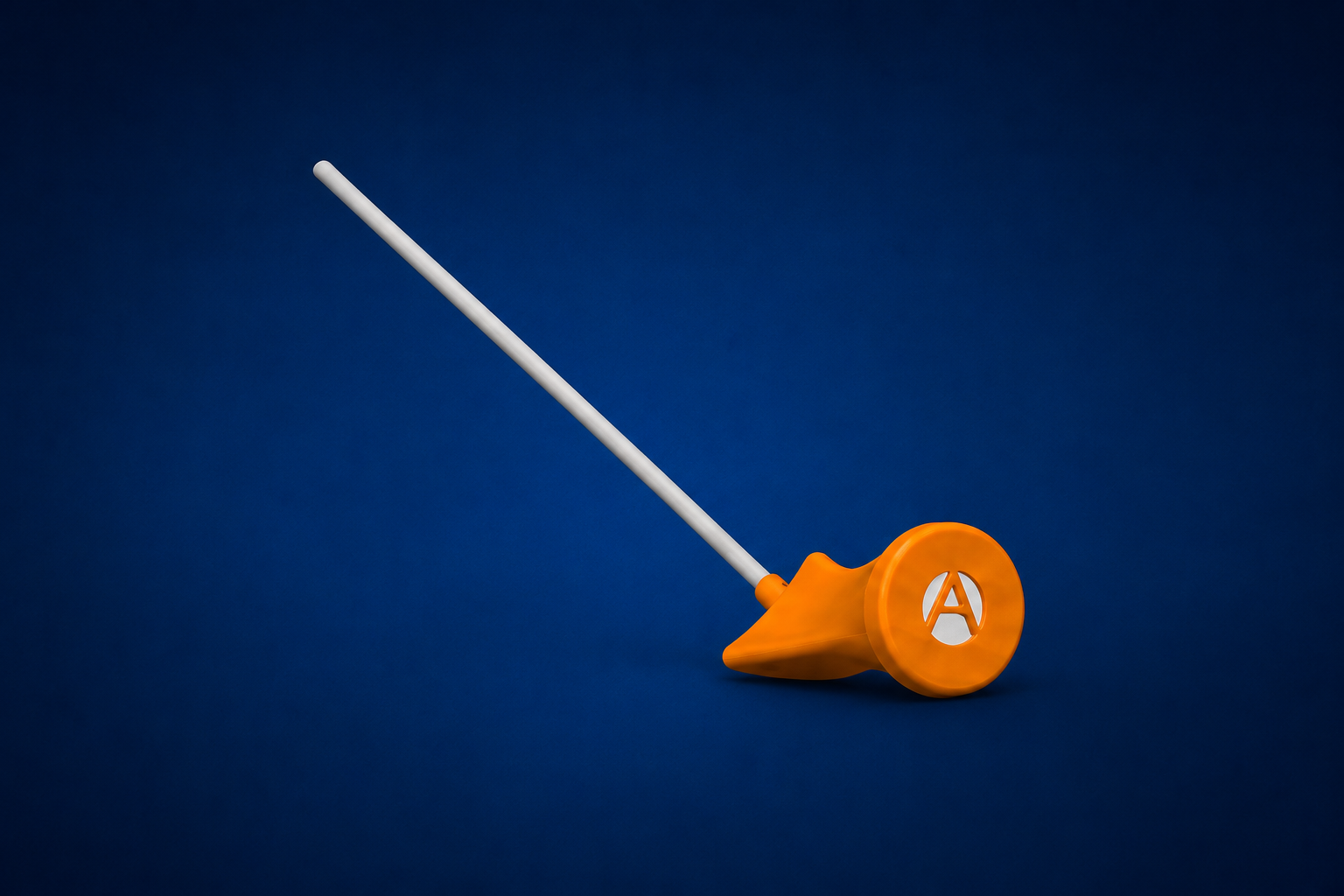
I2F — Improved Fluid Flow
Patented Technology | Commercially Available for Veterinary Use
I2F is a vial-access technology designed to route filtered replacement air directly to the container headspace during medication preparation and administration.
The technology addresses challenges associated with rigid medication containers, including pressure imbalance, spray loss, foaming, bubbles, flow interruptions, and residual medication.
I2F represents the foundation of AII’s broader medication-delivery innovation platform. A human healthcare pathway is also under development.
Technologies in development
Infusion Bag With Rinse Port
Development Stage: Patent Pending
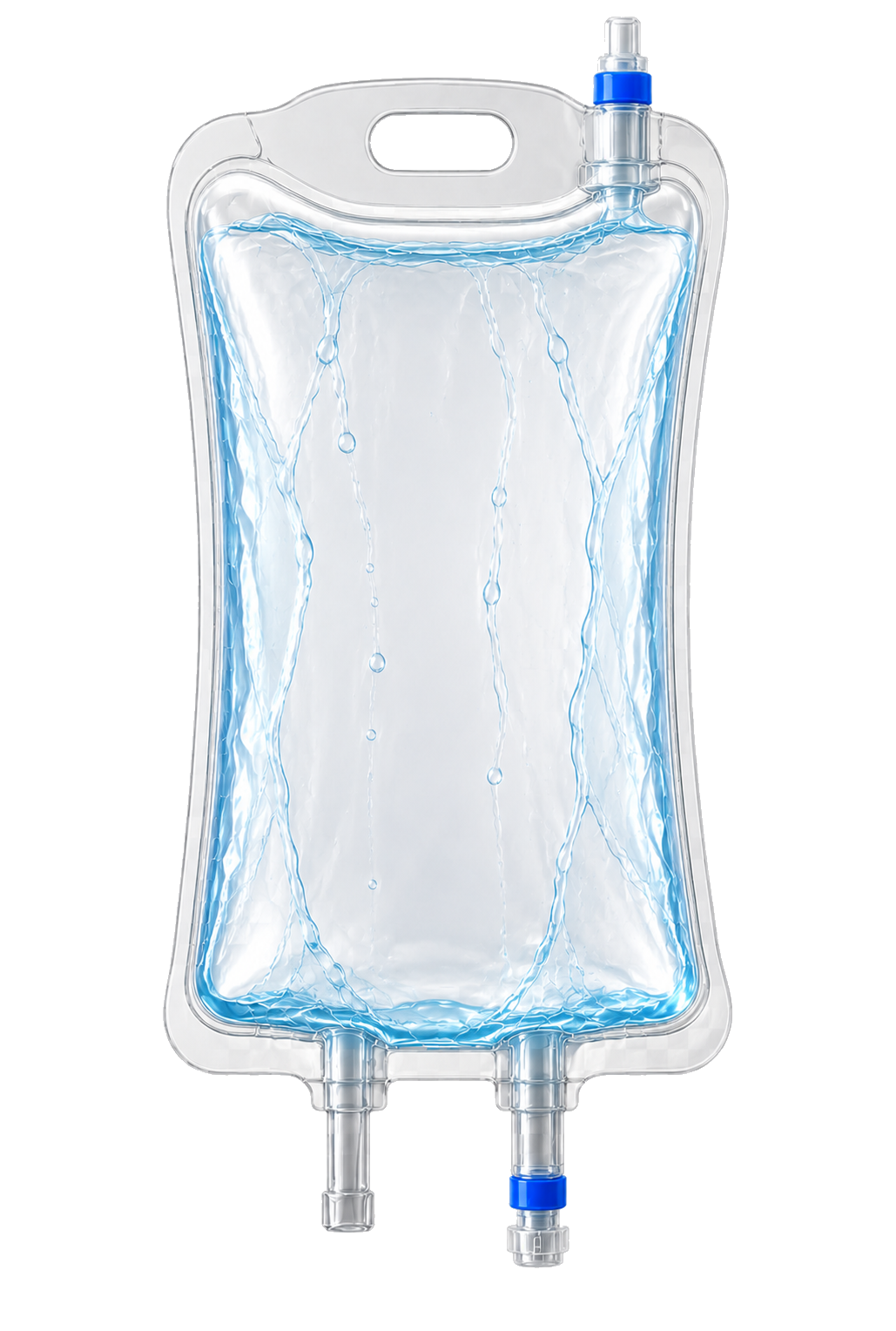
This medication-delivery concept is designed to support the recovery and delivery of medication that may otherwise remain in an infusion bag and associated delivery components.
The technology reflects AII’s broader commitment to reducing residual medication loss and improving medication stewardship throughout the entire administration pathway.
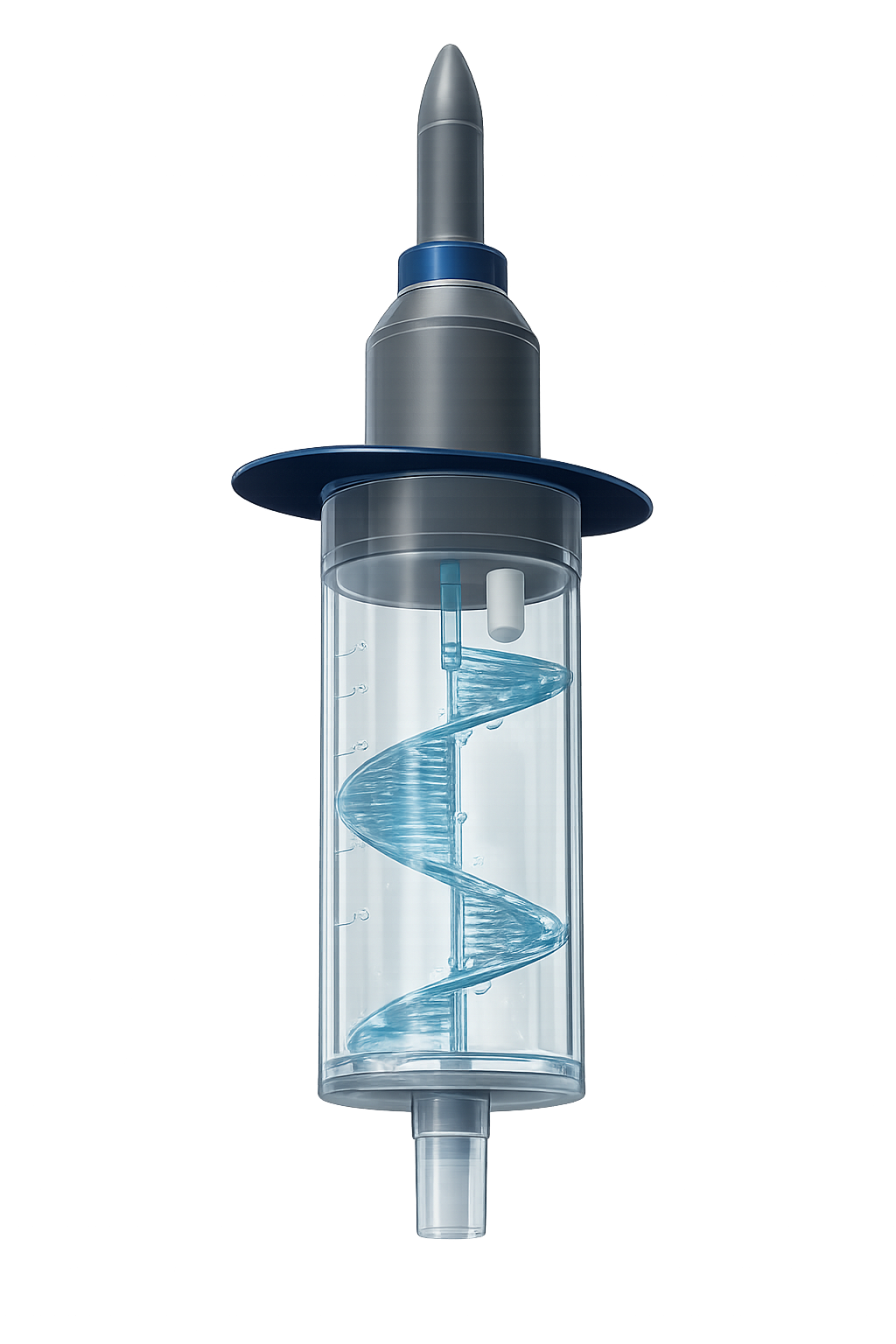
Anti-Microbubble Drip Chamber
Development Stage: Patent Pending
This infusion-system concept is designed to address bubble movement and accumulation within medication-delivery pathways.
The technology is being developed as part of AII’s broader work involving air–liquid behavior, bubble management, flow continuity, and infusion-system performance.
Research-enabling innovation
PROTEUS™ Surrogate Fluid Platform
Development Stage: Research Tool in Development
PROTEUS is being developed as a family of standardized surrogate fluids designed to support controlled bench testing of medication-preparation and infusion-delivery systems.
Different formulations may be used to model selected characteristics such as viscosity, foaming behavior, protein-containing solutions, air–liquid interface disruption, and fluid-transfer performance without using active therapeutic medications.
Continuing Innovation
AII continues to develop additional technologies related to vial access, medication recovery, priming, air and bubble management, infusion-container design, and medication-delivery consistency. Certain concepts remain confidential while development and intellectual-property protections are established.